

Boating Safety - Be Smart and File a Float Plan

What is a Float Plan? A float plan is a document that details your trip's itinerary, including the vessel information, number of passengers, departure and return times, planned route, and contact information. *See below for what to inlcude on your float plan.
A float plan should be left with a reliable person on land so the authorities can quickly begin a search if you do not return as expected; essentially acting as a safety measure to help locate missing boaters in case of an emergency.
Why should you take the time to prepare a float plan? Easy - there are just too many details that need to be accurately remembered and conveyed in an emergency. Without a float plan you are relying on someone else’s memory, a friend, neighbor, or family member, to remember detailed information needed by rescue personnel in order to find you. Important information that can make a difference in the outcome.
If you are going for just a few hours on your boat, let someone know where you expect to be and when you expect to return. If you plan a longer cruise, leave a copy of a written float plan with your marina, yacht club, or friend.
What should you include in a float plan?A float plan includes a description of your boat, who is on board, a description of the safety equipment you are carrying, where you expect to be, and when you expect to be there. Instruct the person holding the float plan to notify the NJSP, Coast Guard or other appropriate agency if you do not return within a reasonable time after your scheduled arrival (taking into account weather, etc.). When you arrive at your destination, or if your plans change, notify the person holding your float plan to avoid unnecessary worry and possible waste of search and rescue resources.
There is no special or official form that you must use for a float plan, though you may find convenient pre-printed ones available in boating supply stores and catalogs, or you can generate a form using these links: floatplancentral.cgaux.org/download/USCGFloatPlan.pdf
The Coast Guard and NJSP will not accept float plans. Do not attempt to file the form with either agency.
Who should prepare a float plan?
First and foremost, any boater going out on the water by themselves. Don't think for a minute that this is only for those with big expensive boats. A Float Plan is equally effective for the owner of an 8-foot kayak or flat-bottom skiff as it is for a 50-foot express cruiser, a 120-foot fishing vessel or luxury yacht. Typically, the operator of the vessel is the individual who prepares the Float Plan. However, any member of the crew can be assigned the preparation and filing duty.
So, what kind of boaters prepare float plans?
Canoeists Day cruisers Hunters Jet Skiers Kayakers Power boaters Private charter boat services Rafters Rowers
Sail boaters Sport fisherman Water skiers Basically, any one spending time on the water!
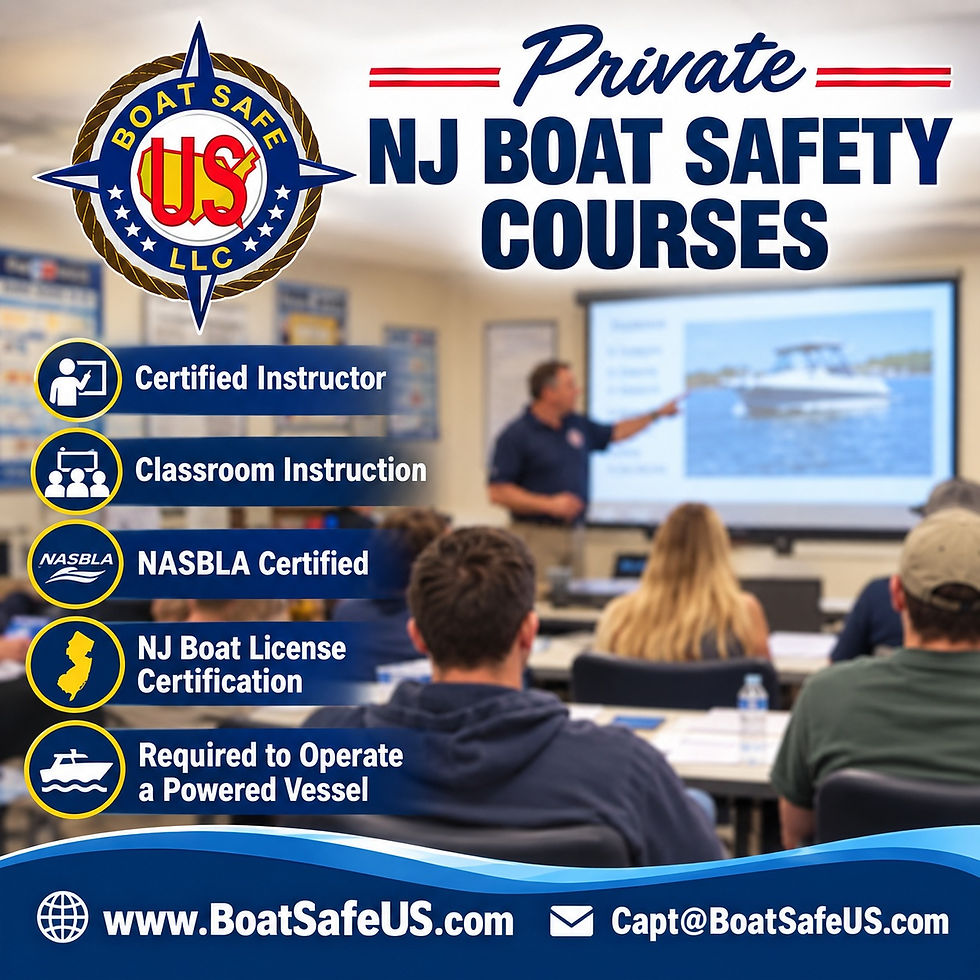
For more information and for Boating Safety classes that are NJ State Police approved and NASBLA certified, go to www.BoatSafeUS.com. Our instructors will provide you with a fun-filled and educational look at Boat Safety in New Jersey. All of our instructors at Boat Safe US, LLC are certified and approved to instruct by the NJ State Police Marine Division and our course is approved by the National Association of State Boating Law Administrators (NASBLA).
Visit us at www.BoatSafeUS.com to reserve your spot today!
*A good float plan should include the following information:
Vessel Information
Boat name
Registration number or documentation number
Make, model, length, and color
Hull type (powerboat, sailboat, PWC, etc.)
Engine type and horsepower
Fuel capacity and amount of fuel onboard
Distinguishing features (canvas color, decals, tower, etc.)
Owner/Operator Information
Operator's full name
Address
Cell phone number
Emergency contact information
Boating safety certificate number (if applicable)
Passenger Information
For each person onboard:
Full name
Age (or approximate age)
Cell phone number
Emergency contact
Medical conditions or allergies (optional but helpful)
Trip Information
Date of departure
Departure time
Departure location (marina, launch ramp, etc.)
Planned destination(s)
Intended route
Alternate destinations
Expected return date and time
Time by which authorities should be notified if overdue
Vehicle and Trailer Information
If leaving a vehicle at the launch:
Vehicle make, model, year, and color
License plate number
Trailer description and plate number
Parking location
Communications Equipment
List any communication devices onboard:
VHF marine radio (channel monitored)
Cell phones
Satellite phone
EPIRB or PLB
AIS transponder
GPS/chartplotter
Safety Equipment
Include what safety gear is carried:
Number of life jackets
Throwable flotation device
Fire extinguishers
Visual distress signals
First aid kit
Anchor
Bilge pump
Flares
Sound signaling device
Towing Vehicle (if applicable)
Vehicle description
License plate
Where it will be parked
Emergency Instructions
Tell the person holding the float plan:
Do not immediately call authorities if you're a few minutes late.
Try calling the operator and passengers first.
Contact the marina or destination if appropriate.
If the boat is significantly overdue and cannot be reached, contact the local marine police or the nearest coast guard station and provide them with the float plan.
Weather and Float Plan Holder
Expected weather forecast before departure
Name and phone number of the person holding the float plan
#boatsafety #safeboating #boatclass #boatexam #boatsafeus #boatnj #njboating #wearit #floatplan #pwc #jetski #seadoo #seatow #seatowfoundation


Comments