

National Safe Boating Week
National Safe Boating Week is being held from May 16-22, 2026, reminding all boaters to brush up on boating safety skills and prepare for the boating season. This observance week is the annual kick-off of the Safe Boating Campaign, a global awareness effort that encourages boaters to make the most of their boating adventure by being responsible.

About the National Safe Boating CouncilEstablished in 1958, the National Safe Boating Council is the foremost coalition for the advancement and promotion of safer boating through education, outreach, and training. For more information about NSBC programs and professional development opportunities, visit www.safeboatingcouncil.org.
*Take a boating safety course. Gain valuable knowledge and on-water experience in a boating safety course with many options for novice to experienced boaters.
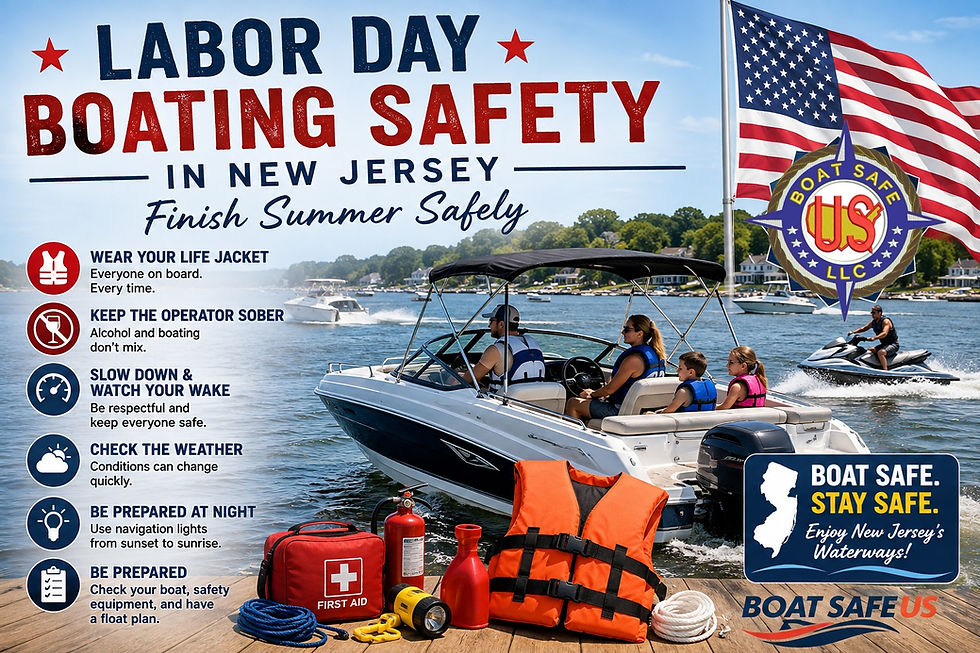
*Wear a life jacket. Make sure everyone wears a life jacket – every time. A stowed life jacket is no use in an emergency.
*Check equipment. Schedule a free vessel safety check with local U.S. Coast Guard Auxiliary or U.S. Power Squadrons to make sure all essential equipment is present, working and in good condition.
*Make a float plan. Always let someone on shore know the trip itinerary, including operator and passenger information, boat type and registration, and communication equipment on board.
*Use an engine cut-off device – it’s the law. An engine cut-off device, or engine cut-off switch, is a proven safety device to stop the boat’s engine should the operator unexpectedly fall overboard.
*Watch the weather. Always check the forecast before departing on the water and frequently during the excursion.
*Know what’s going on around you at all times. Nearly a quarter of all reported boating accidents in 2021 were caused by operator inattention or improper lookout.
*Know where you’re going and travel at safe speeds. Be familiar with the area, local boating speed zones and always travel at a safe speed.
*Never boat under the influence. A BUI is involved in one-third of all recreational boating fatalities. Always designate a sober skipper.
*Keep in touch. Have more than one communication device that works when wet. VHF radios, emergency locator beacons, satellite phones, and cell phones can all be important devices in an emergency.
Get your NJ Boat Safety Certificate Classes and Exams Available! www.BoatSafeUS.com
READ ALL ABOUT IT! Personal Floatation Devices: https://www.boatsafeus.com/post/nj-boating-safety-life-jackets-and-other-pfds
Boating Check List: https://www.boatsafeus.com/post/boating-checklist-be-ready-for-boating-season
Filing a Float Plan: https://www.boatsafeus.com/post/boating-safety-be-smart-and-file-a-float-plan
Boating in NJ - what you need to know: https://www.boatsafeus.com/post/boating-in-new-jersey-where-to-begin
Nj Boat Safety Certificate vs NJ Boat License: https://www.boatsafeus.com/post/new-jersey-boat-license-or-new-jersey-boating-safety-certificate-what-s-the-difference
#boatlicense #recademics #recademicsoutdooreducation #boated #njfishing #newjersey #boatsafety #njboating #SafeBoating #aceboater #boaterexam #nationalsafeboatingweek #nationalsafeboatingweek2026 #memorialday2026


Comments